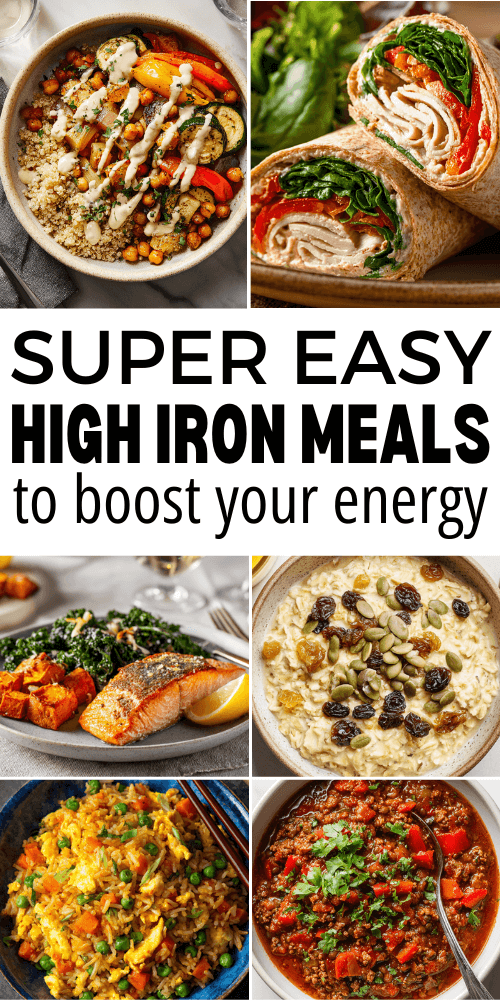
This post will show you the best iron rich foods to add to your meals if you’re low on energy or low on iron (or both).
If you’ve ever typed “why am I so tired all the time” into Google at 2 AM, you’re not alone.
Low iron is more common than people think, especially if you have heavy periods, skip red meat, or basically live on snacks and oat milk lattes. Been there.
I didn’t even realize I was iron deficient until I started waking up more tired than when I went to sleep. My skin was dull, my brain felt foggy, and I was dizzy just standing up too fast. I kept blaming it on being “busy” or “hormones” until I finally got a blood test.
Yep, low iron.
So if you feel like a lifeless potato lately, this post is for you. Iron is a mineral your body actually needs to function. No iron means no hemoglobin, which means less oxygen in your blood, which means… you feel like trash. But the good news is it’s not that hard to fix once you know what to eat.
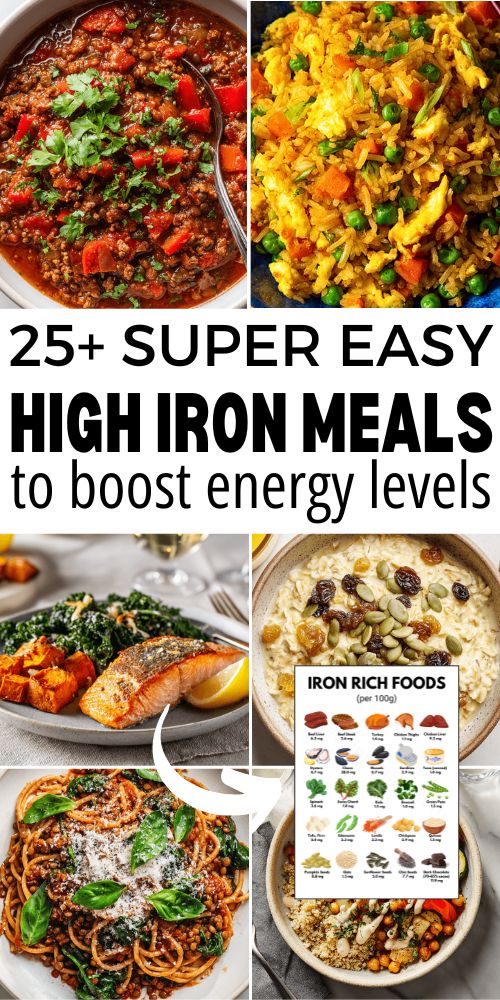

What Kind of Iron Are We Talking About?
There are two types.
Heme iron comes from animal foods, and your body absorbs it super easily.
Non-heme iron is in plant foods, and it’s still great, but needs a little help (more on that below).
You don’t need to be a nutrition nerd to get this right. Just mix in a few of the right foods, and you’re golden.
15 Fast Keto Recipes That Actually Work
Iron Rich Foods That Are ACTUALLY Worth Eating
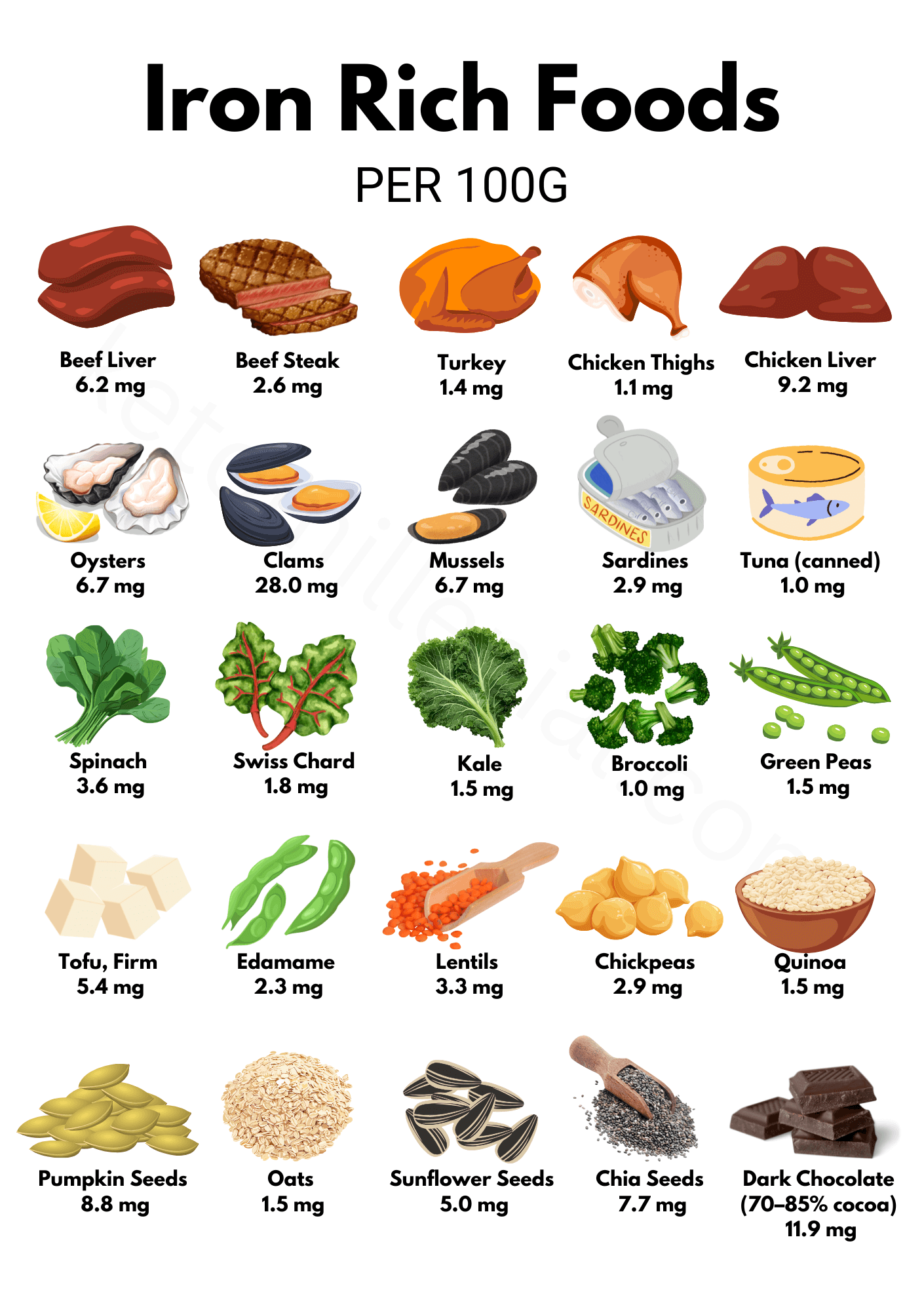
Let’s break it down. These are the MVPs when it comes to boosting iron naturally:
If You Eat Meat
1. Beef
Ground beef is one of the easiest ways to sneak in iron. Toss it in tacos, pasta, or a quick rice bowl.
Iron: About 2.5 mg per 100g
2. Liver
Not gonna lie—it’s not for everyone. But if you’re into it, it’s crazy high in iron.
Iron: Up to 10–13 mg per 100g
3. Chicken thighs
Way more flavorful than chicken breast and has a bit more iron too. Roast or pan-fry it and you’re good.
Iron: About 1.3 mg per 100g

4. Turkey (dark meat)
Great for wraps, salads, or protein bowls. Tastes better than it gets credit for.
Iron: About 1.1 mg per 100g
5. Tuna or sardines
These are your go-to pantry proteins. Easy, no prep, and surprisingly helpful.
Iron: Around 1.4 mg per small can (tuna), 2.5 mg per 100g (sardines)
If You’re Plant-Based
6. Lentils
Perfect for curries, soups, pasta sauce—whatever. They’ve got fiber, protein, and iron all in one.
Iron: About 3.3 mg per ½ cup cooked
7. Chickpeas
Roast them, mash them into hummus, or toss into salads. Always dependable.
Iron: Around 2.4 mg per ½ cup cooked

8. Tofu
Soaks up flavor like a champ and fills you up too. Air fry it, pan-fry it, do what you want.
Iron: About 3.4 mg per ½ block
9. Spinach
Raw is fine, but cooked gets you way more iron per bite. Add citrus or capsicum to help your body absorb it.
Iron: Around 3.6 mg per ½ cup cooked
10. Pumpkin seeds
Snack on them or sprinkle onto yogurt, oats, or smoothie bowls. Tiny but mighty.
Iron: About 2.5 mg per tablespoon
11. Quinoa
High in protein, easy to cook, and plays nice in both salads and warm meals.
Iron: Around 1.3 mg per ½ cup cooked
12. Blackstrap molasses
Random but powerful. Stir a spoonful into warm oats or smoothies.
Iron: About 3.5 mg per tablespoon
13. Edamame
These little soybeans are great as a snack or tossed into a stir-fry.
Iron: Around 2.3 mg per ½ cup cooked
14. Oats
Easy breakfast base with fiber and a little iron too.
Iron: Around 1.7 mg per ½ cup dry
15. Dark chocolate (70% or more)
Yes, this actually counts. A square or two after dinner doesn’t hurt.
Iron: Around 3.3 mg per 28g square
Iron + Vitamin C = Power Move
Here’s what no one tells you: eating iron-rich foods is step one. Getting your body to actually absorb the iron is step two. And for that, you need vitamin C.
Think strawberries, oranges, bell peppers, lemon juice. Add that stuff to your iron meals whenever you can.
Also, heads up: tea and coffee can block iron absorption. So maybe skip the post-lunch latte if you just had a spinach salad.
Another thing? Don’t take calcium and iron at the same time. They compete with each other, and your body just ends up confused.
Easy Meal Ideas That Don’t Feel Like a Chore
Here are a few combos that work for me and don’t take forever to throw together:
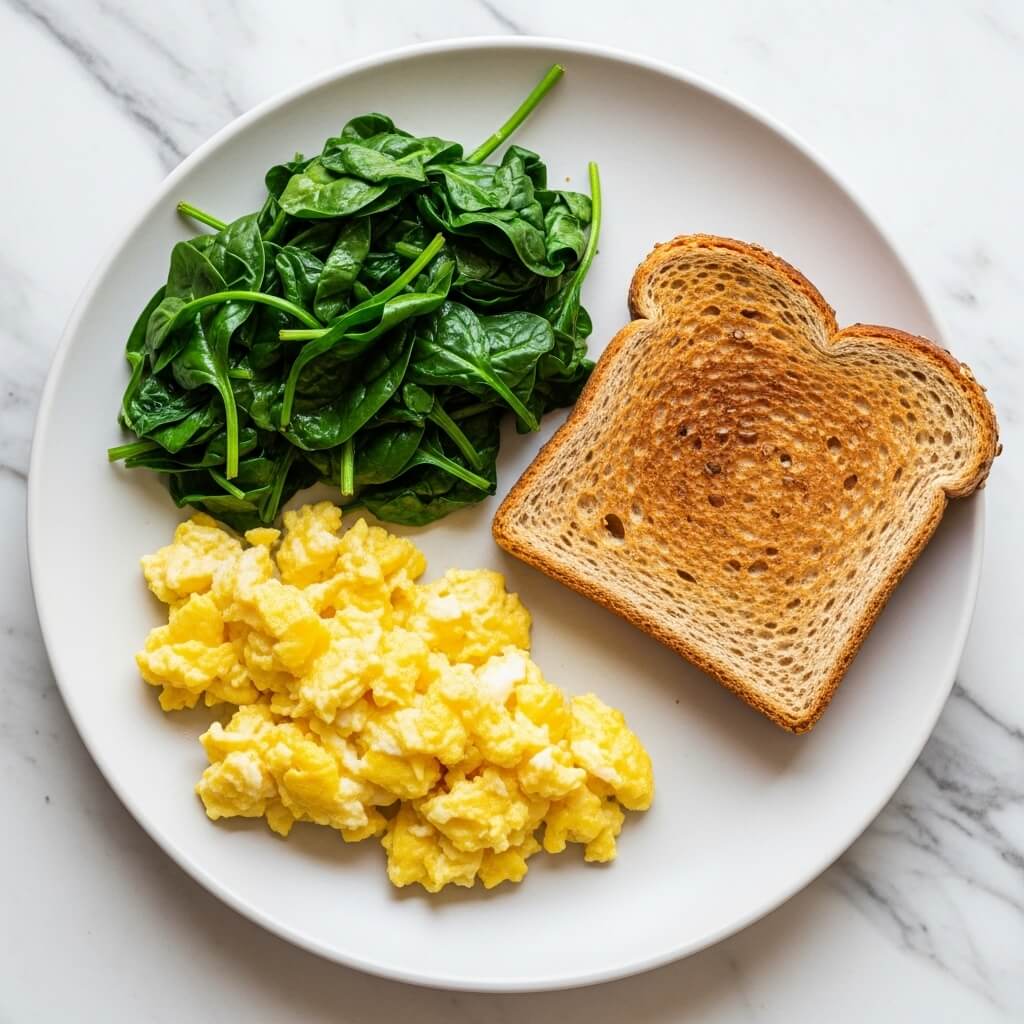
1. Scrambled eggs with sautéed spinach and whole grain toast
Scramble 2 eggs and cook with a little olive oil or butter. Sauté a handful of spinach and serve with 1 slice of whole grain toast.
Iron estimate: About 4 mg, mostly from the spinach and whole grain bread.
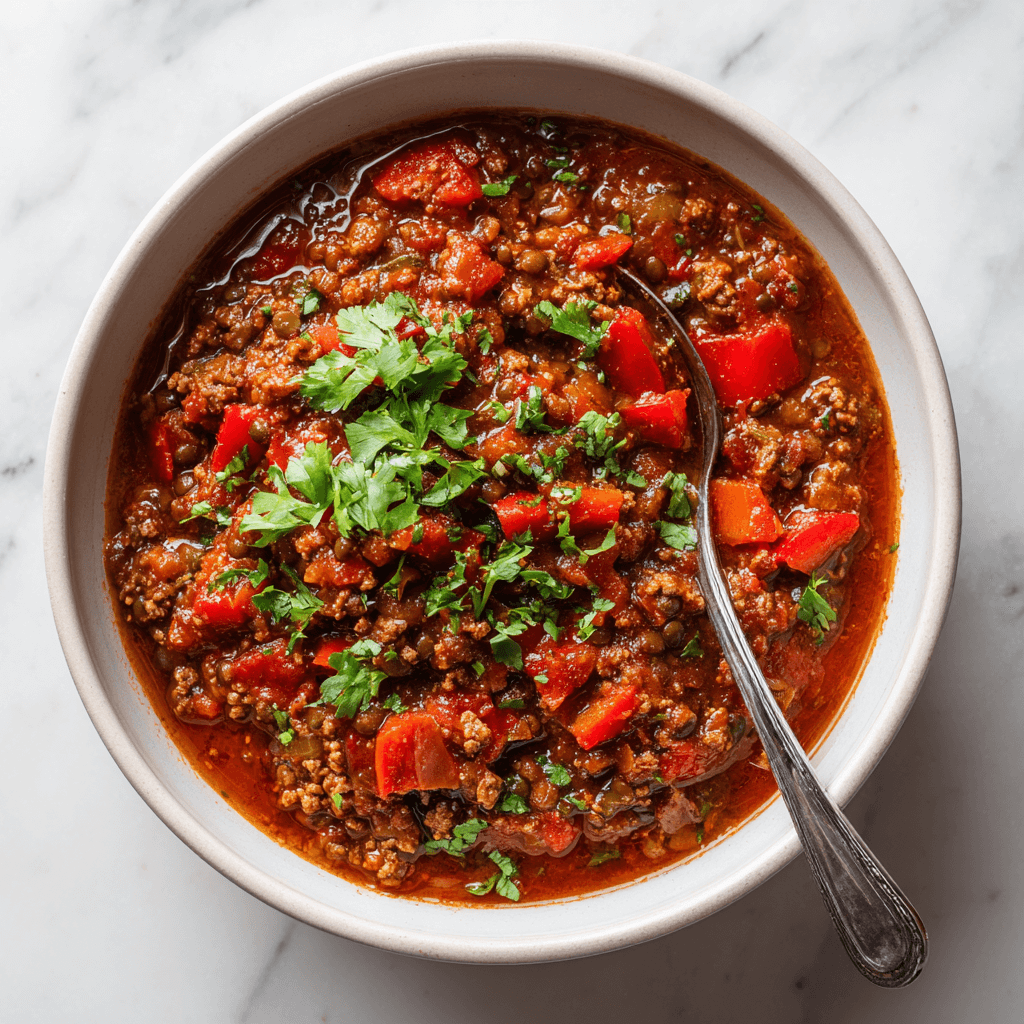
2. Lentil and beef chili with tomatoes and bell peppers
Use 100g ground beef, ½ cup cooked lentils, ½ cup canned tomatoes, and ½ chopped bell pepper. Simmer it all in a pan with garlic, chili powder, and onion until thick.
Iron estimate: Around 6–7 mg per bowl from the beef, lentils, and veggies.
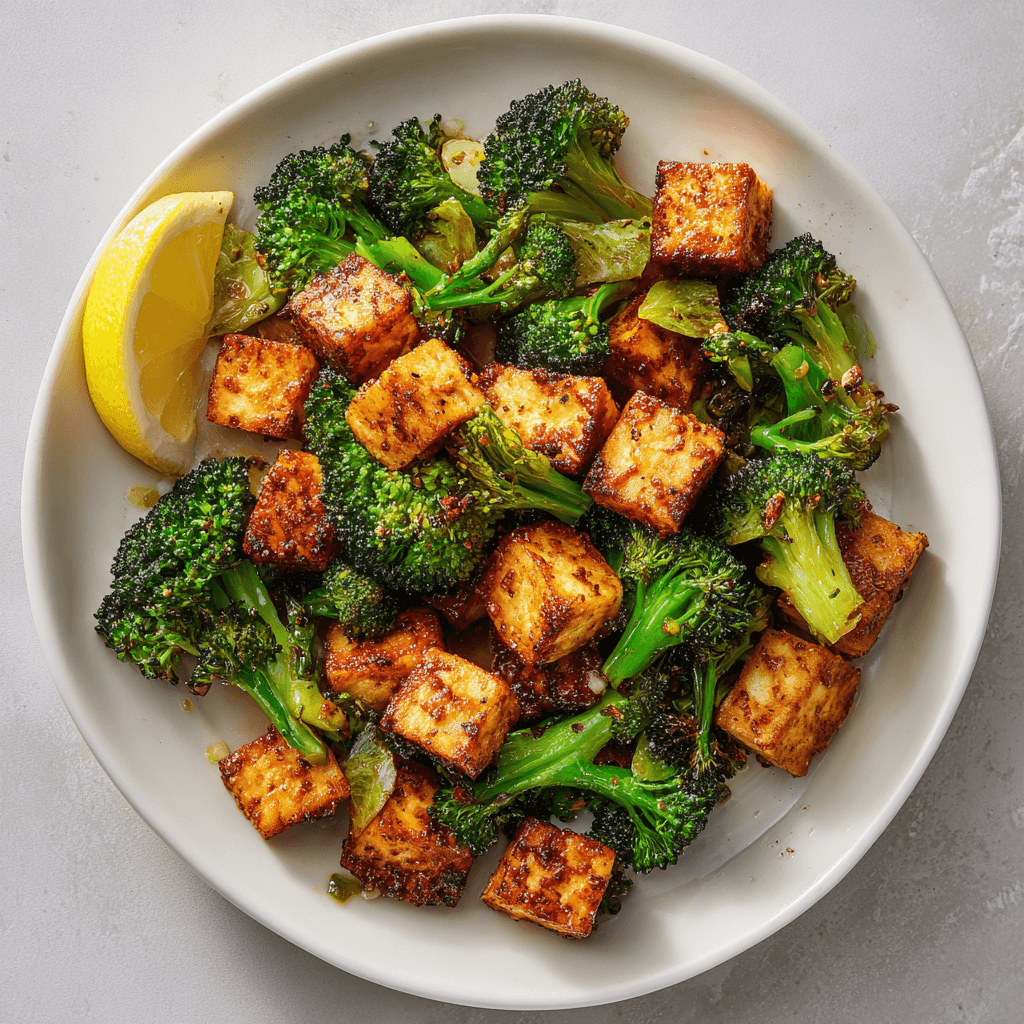
3. Tofu stir-fry with broccoli and lemon
Slice ½ block of firm tofu and cook it in a hot pan with olive oil, garlic, and 1 cup chopped broccoli. Squeeze fresh lemon juice over the top before serving.
Iron estimate: Around 4–5 mg, mostly from tofu and broccoli.
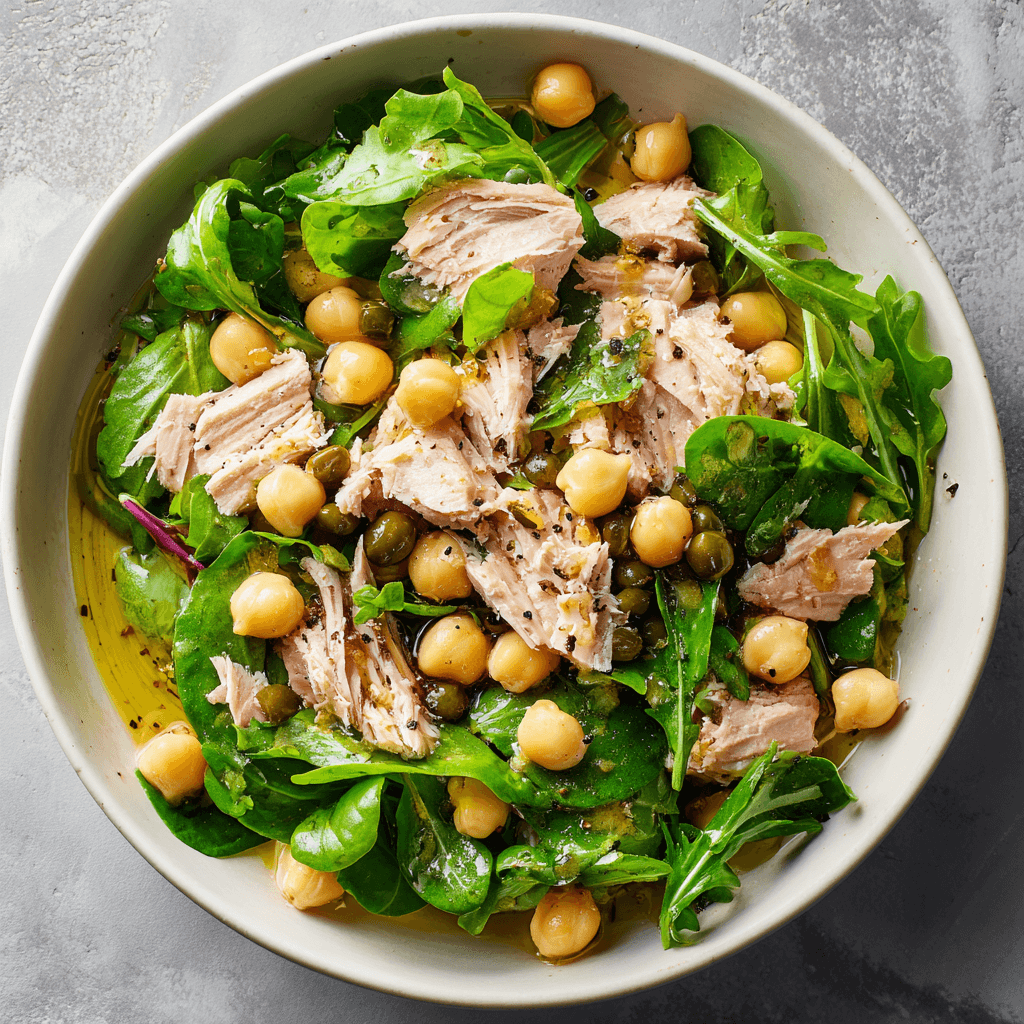
4. Tuna salad with chickpeas, greens, and olive oil
Mix 1 small can of tuna with ½ cup canned chickpeas, a handful of greens like baby spinach or rocket, and a drizzle of olive oil. Add lemon juice or mustard for extra flavor.
Iron estimate: About 4 mg per bowl, thanks to the tuna, chickpeas, and greens.
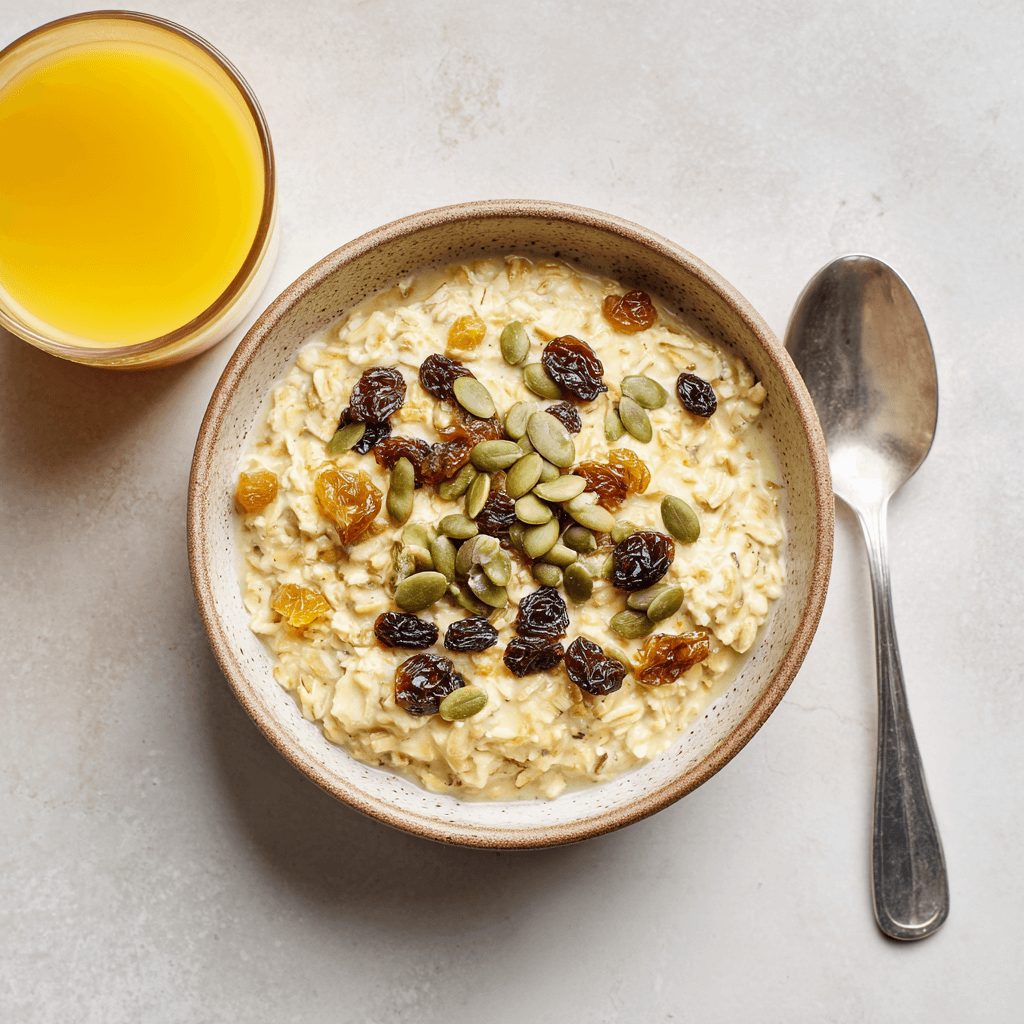
5. Oatmeal with raisins, pumpkin seeds, and a splash of orange juice on the side
Make ½ cup oats with milk or water, then top with 1 tablespoon pumpkin seeds and 1 tablespoon raisins. Drink a small glass of orange juice on the side to help with absorption.
Iron estimate: Around 3–4 mg, boosted by vitamin C from the orange juice.
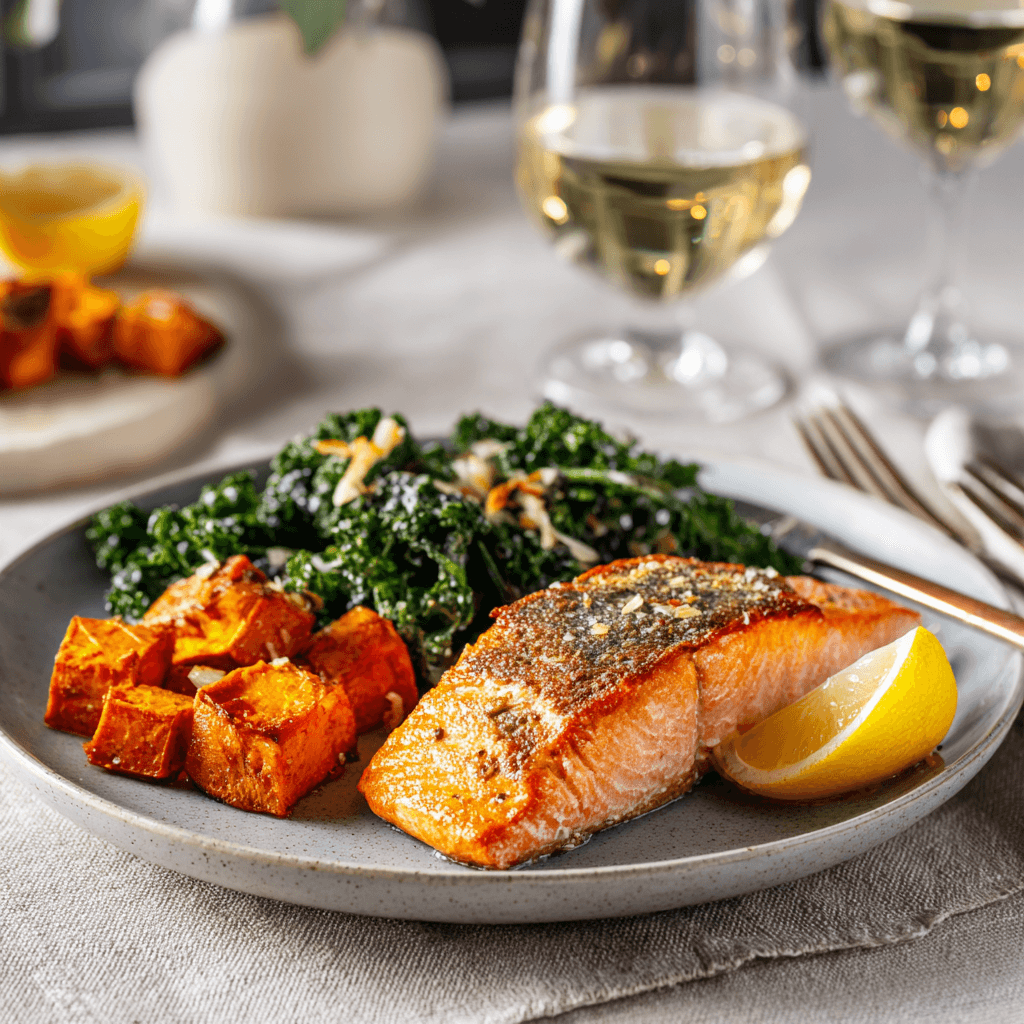
6. Baked salmon with roasted sweet potatoes and sautéed kale
Use about 150g of salmon, 1 small sweet potato, and a handful of chopped kale. Bake the salmon and sweet potato at 200°C for 20 minutes, then quickly sauté the kale in olive oil and garlic.
Iron estimate: Around 3–4 mg, depending on portion size and kale.
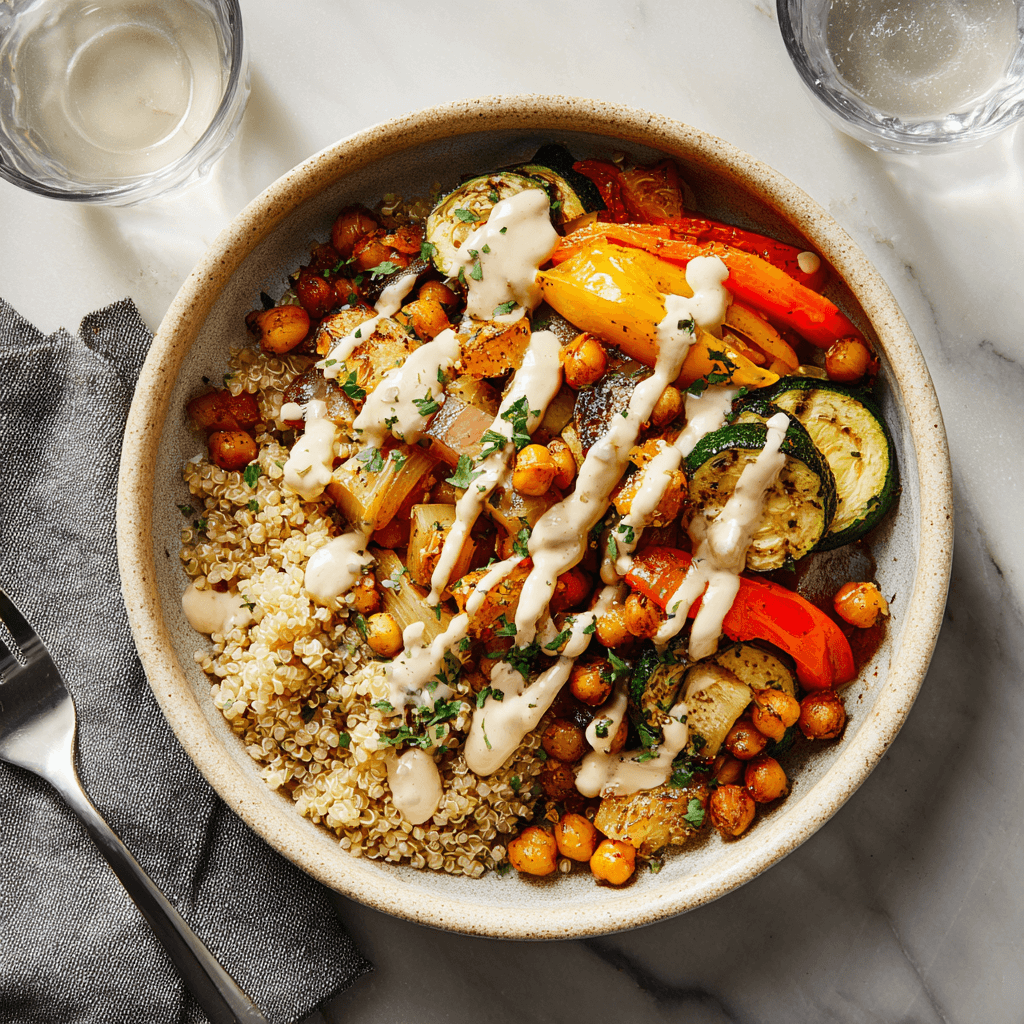
7. Chickpea and quinoa bowl with roasted veggies and a drizzle of tahini
Mix ½ cup cooked quinoa, ½ cup canned chickpeas, and any roasted veggies like zucchini, capsicum, or carrots. Drizzle with a spoon of tahini and squeeze of lemon for a quick bowl.
Iron estimate: 4–5 mg per bowl, thanks to the chickpeas, quinoa, and tahini.
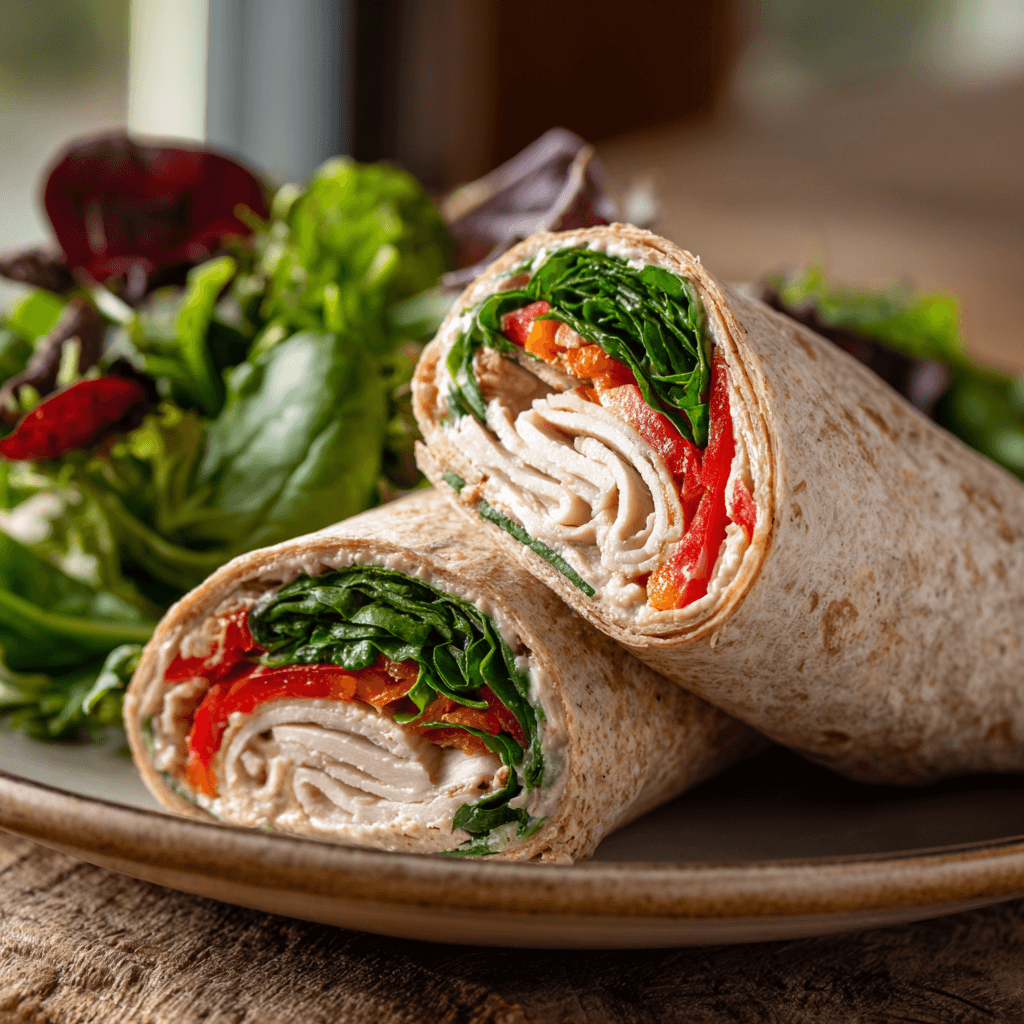
8. Turkey and hummus wrap with spinach and red pepper strips
Spread 2 tablespoons of hummus on a whole wheat wrap, add 80–100g of cooked turkey slices, a handful of baby spinach, and a few strips of raw red capsicum. Roll it up and you’re good to go.
Iron estimate: About 3 mg, boosted by the turkey and spinach combo.
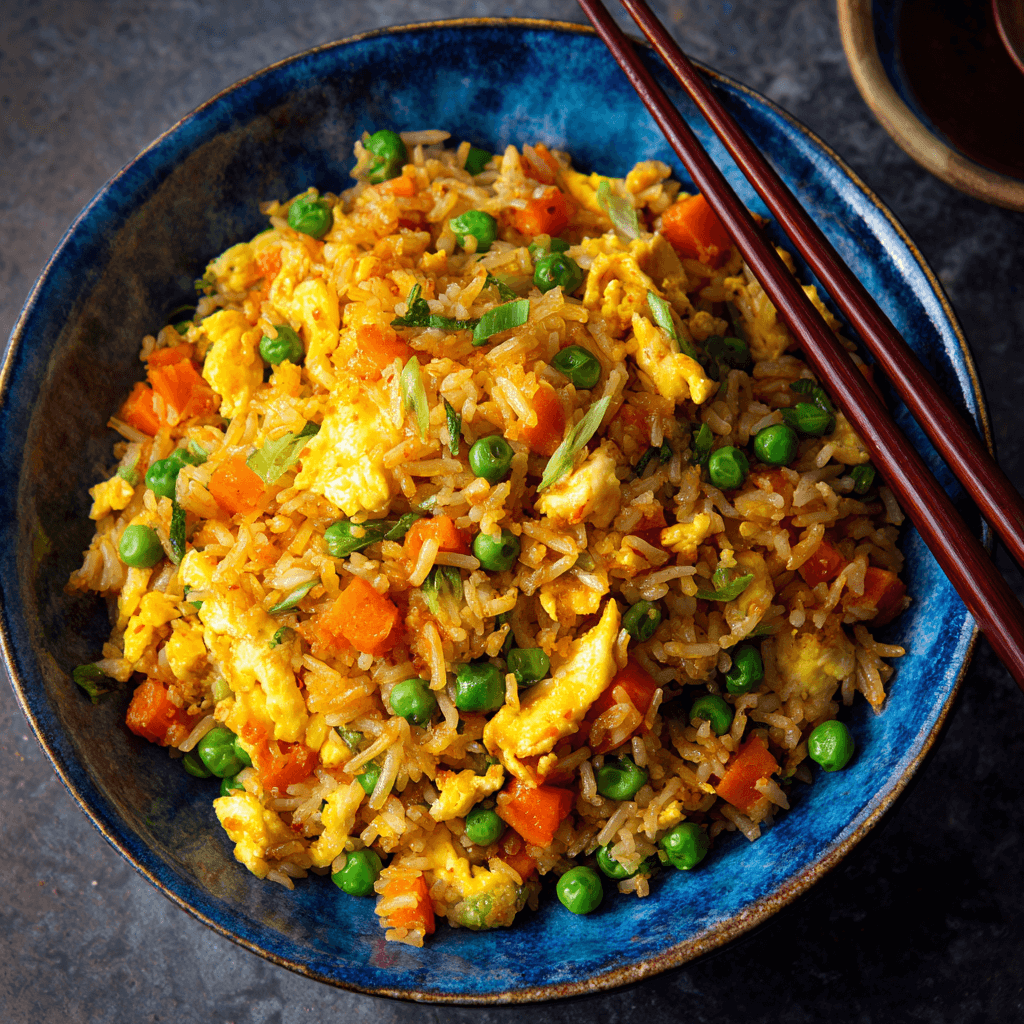
9. Egg fried rice with peas, carrots, and a handful of chopped cashews
Cook 1 cup of day-old rice with 1 egg, ¼ cup peas, ¼ cup diced carrots, and a small handful of chopped cashews. Stir-fry it all with soy sauce or tamari in a hot pan for a fast dinner.
Iron estimate: Around 2.5–3 mg, mostly from the egg, peas, and cashews.
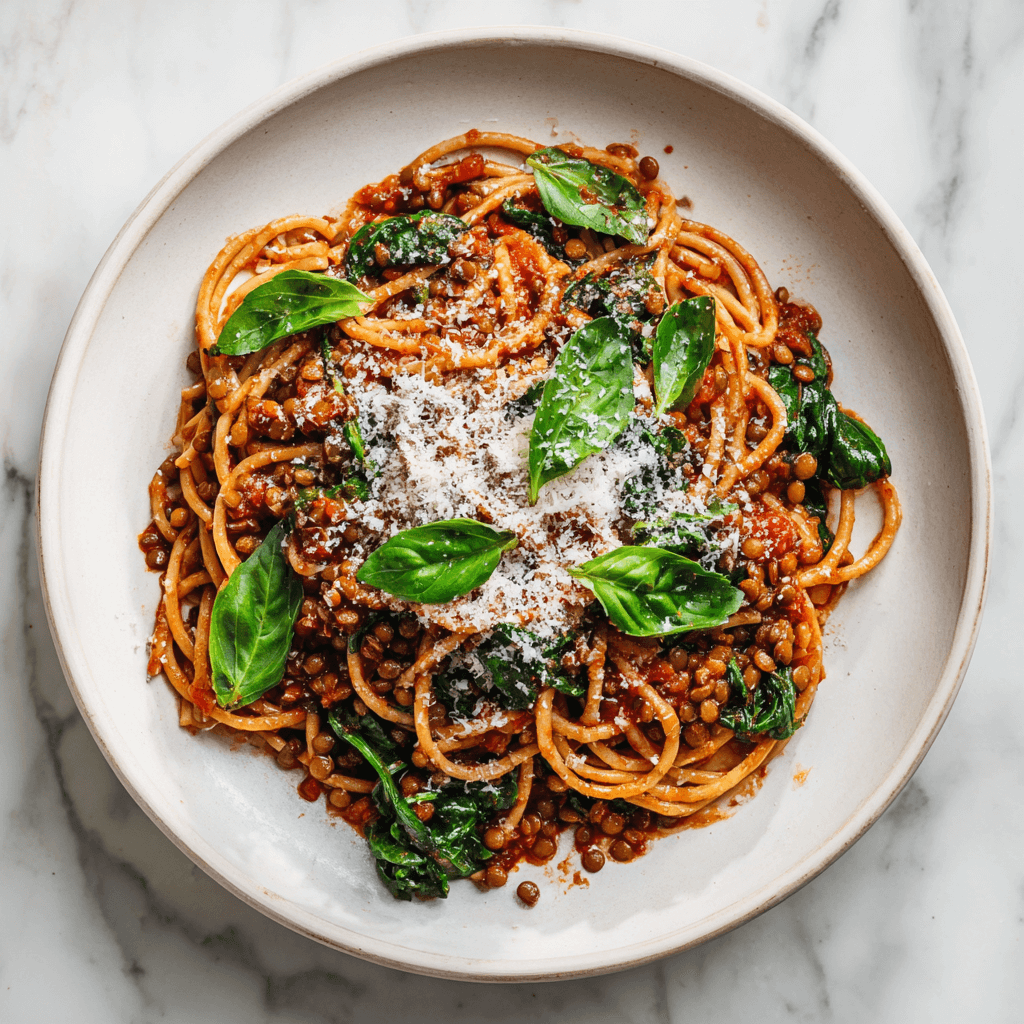
10. Whole wheat pasta tossed with lentils, spinach, and a little marinara
Use about 1 cup cooked whole wheat pasta, ½ cup cooked brown lentils, and a handful of fresh or frozen spinach. Heat it all with ½ cup marinara sauce and top with nutritional yeast or grated cheese.
Iron estimate: 5–6 mg per serve, especially if you use lentils and spinach generously.
No need to go full Pinterest-perfect meal prep. Just mix and match from the lists above, and you’re doing more than most.
FAQ
What are the symptoms of low iron?
Feeling tired all the time, brain fog, pale skin, cold hands and feet, shortness of breath, and sometimes even weird cravings like ice. If you’re constantly wiped out for no reason, it’s worth getting checked.
What are the best iron rich foods for women?
Beef, lentils, tofu, spinach, and iron-fortified cereals. Bonus points if you add vitamin C.
Are eggs high in iron?
Not really. They have some, but they’re not top tier.
Can you get enough iron without eating meat?
Yep, you just need to be more strategic. Combine non-heme iron with vitamin C and aim for variety.
Do I need a supplement?
Maybe. If you’re super low or not absorbing well, food might not be enough. Talk to your doc.
If you feel like you’ve been running on empty, it’s worth checking your iron levels. It’s such a common thing, and most people have no idea they’re low until they’re already feeling awful. Food can help, and the meals don’t have to be boring or complicated. Just add a few of these to your routine and see how you feel. You deserve to have energy that lasts past 3pm.
Let me know if you want me to put together a full iron-rich meal plan or grocery list. I’ve got you!